
By Khor Yu-Leng, yuleng@segi-enam.com
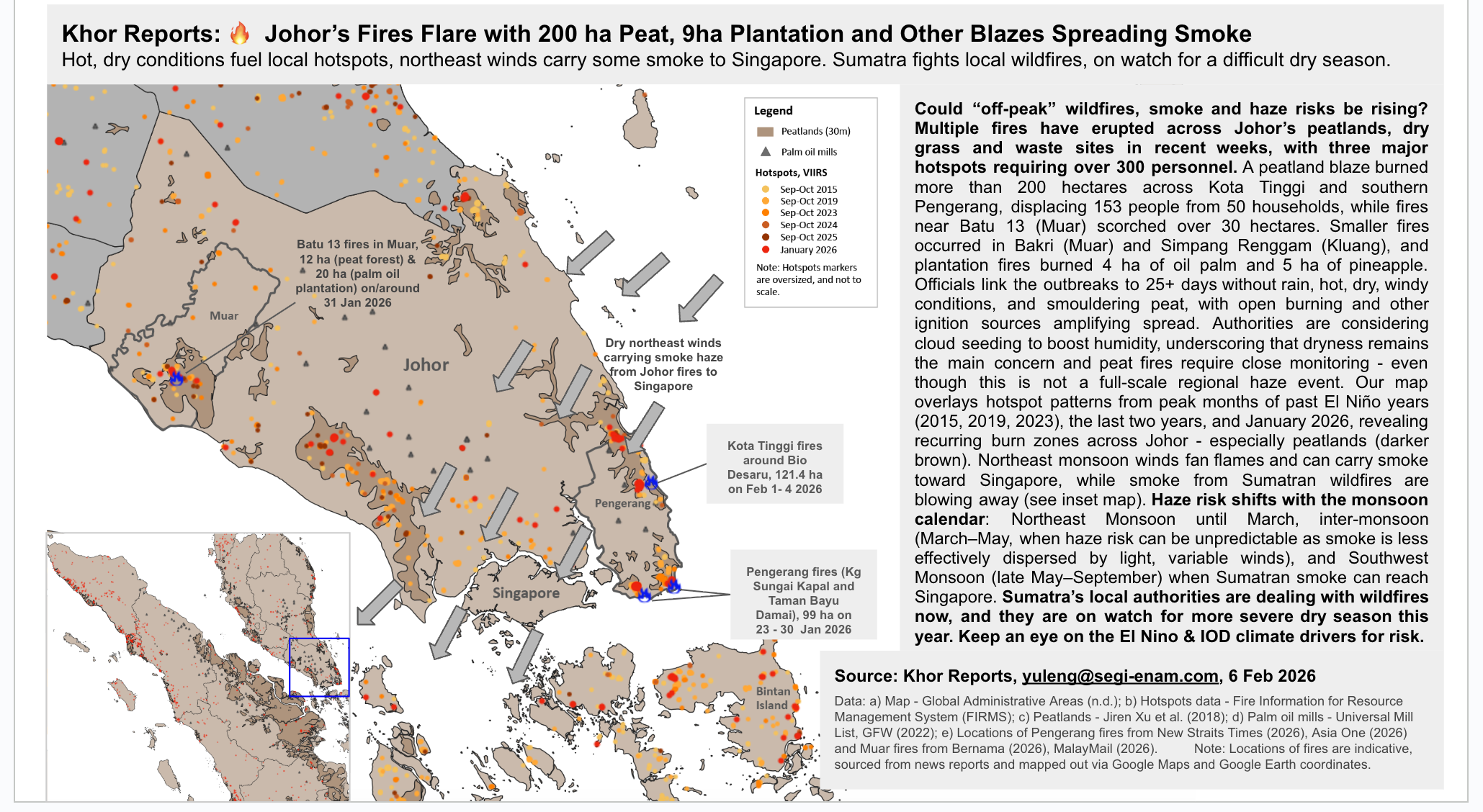
Multiple fires have broken out across Johor’s peatlands, dry grass and waste sites in recent weeks, with authorities battling three major hotspots and deploying more than 300 personnel. A large peatland blaze near Pengerang forced evacuations and blanketed nearby communities in thick smoke.
The fires were primarily linked to prolonged hot, dry and windy conditions which desiccated peat soils and vegetation - creating ideal conditions for rapid spread and making suppression harder. Authorities have also flagged heightened open-burning risks, while regional data shows fires often originate from dumpsites, farms, plantations, orchards and industrial areas. Northeast monsoon winds are currently fanning flames and, at times, can carry smoke toward Singapore. However, these wind patterns are preventing transboundary haze risks stemming from ongoing Sumatran wildfires. See our map below for more context.
This weather-driven but human-amplified fire episode is shaped by short-term drought rather than El Niño-scale forcing. Still, the risk profile resembles early dry-season dynamics - peat ignition, fire-prone agricultural edges and wind patterns influencing cross-border haze - and warrants close monitoring, even if this is not yet a structural regional haze crisis. Makes us question - are “off peak” wild fire haze smog risks rising?
Reach us at khorreports@gmail.com for more information!