
By Khor Yu-Leng, yuleng@segi-enam.com
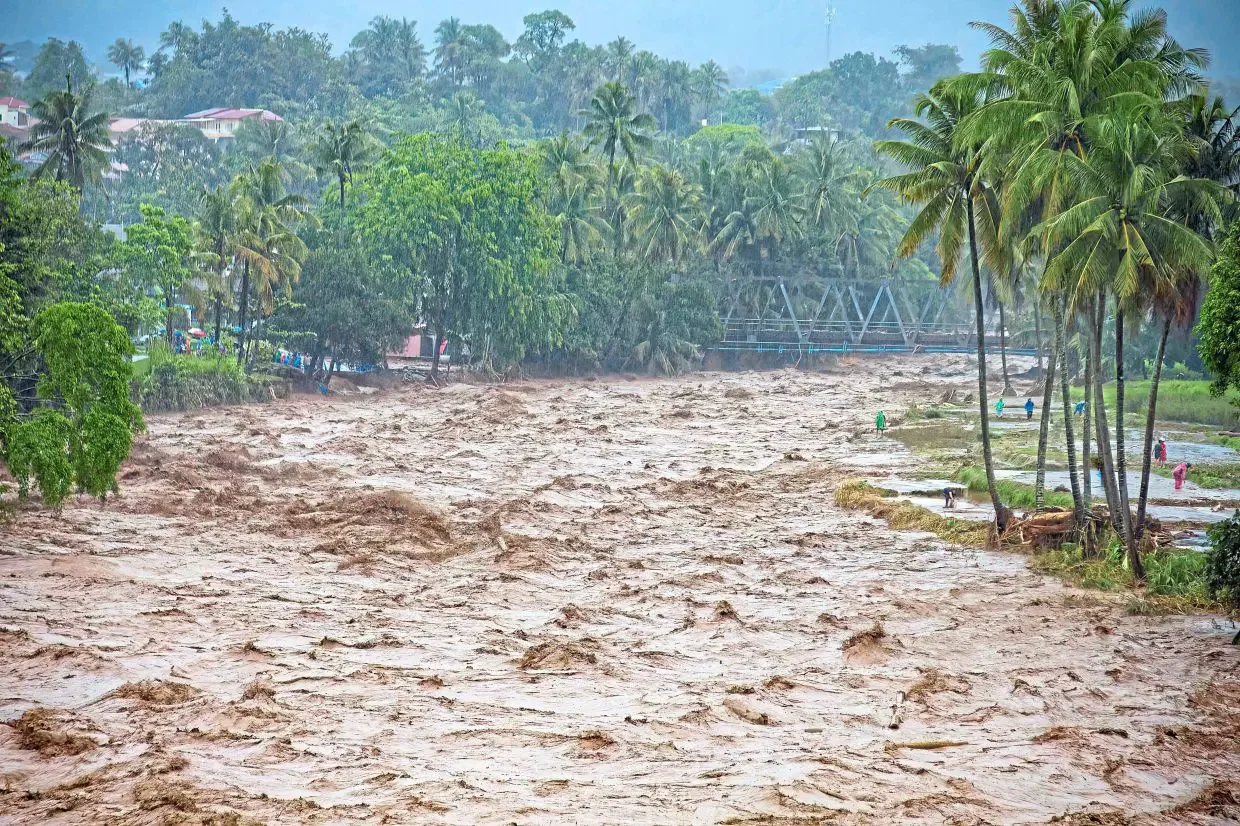
Cyclone Senyar, which struck Sumatra in late November 2025, exposed how upstream watershed land-use decisions can sharply amplify disaster risk. Extreme rainfall interacted with degraded forests and fragmented concessions, worsening floods and landslides across Aceh, North Sumatra and West Sumatra. The human cost was severe, with hundreds killed, hundreds more missing, millions affected and large-scale displacement of communities, particularly in flood-prone and deforested watersheds.
Post-disaster audits concluded that environmental degradation within industrial forestry, mining and infrastructure concessions materially intensified runoff, sediment flows and debris movement. Authorities linked these land-use failures directly to downstream destruction, marking a shift toward holding companies accountable not only for regulatory breaches but for their contribution to disaster impacts.
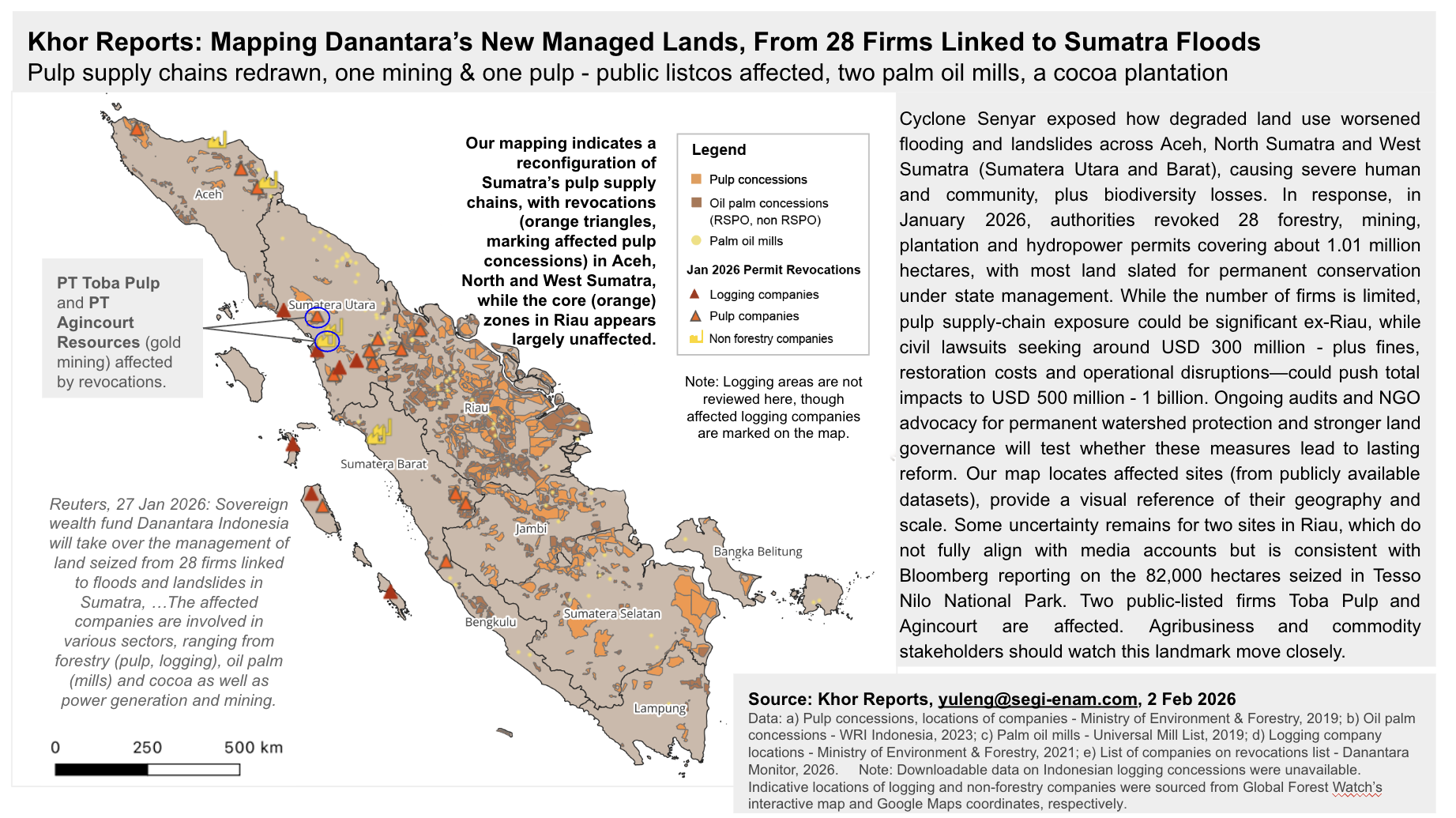
The fallout is now reshaping pulp supply chains: our mapping analysis (see below) shows disruption concentrated in Aceh, North Sumatra and West Sumatra, while the core pulp zone in Riau appears largely unaffected, raising questions around fibre sourcing, logistics and compliance for operators outside Riau, many of whom come under Danantara Indonesia’s umbrella.
The government response has been significant. 28 permits across forestry, mining, plantation and hydropower operations - covering about 1.01 million hectares - have been revoked, with around 900,000 hectares slated for redesignation as permanent conservation forest. Management of seized land will be transferred to the state-linked entity Danantara, tasked with preventing re-occupation while limiting social disruption for affected workers and communities.
Financial and operational pressures are building. Civil lawsuits seeking roughly IDR 4.8 trillion (around USD 300 million) in environmental damages are underway, with combined exposure from fines, restoration obligations, suspended permits and reputational impacts potentially reaching USD 500 million to USD 1 billion. Authorities say audits will continue, while NGOs are calling for permanent protection of high-risk watersheds, greater transparency in concession ownership and large-scale restoration to reduce future disaster losses.
Note on palm oil. Our assessment broadly aligns with available reports, and the overall impact of Cyclone Senyar on Sumatra’s oil palm sector appears to have been limited compared with the severe disruption seen in upland forestry and watershed areas. While the cyclone caused severe flooding and landslides in Aceh, North Sumatra, and West Sumatra, most large oil palm plantations in lowland and coastal zones were relatively spared. Smallholder communities in some areas, particularly Aceh, suffered catastrophic home losses, but core estate operations remained largely intact. Disruptions were primarily logistical, with temporary road blockages and minor water damage to offices and warehouses; fresh fruit bunch deliveries generally resumed within 5–10 days. Overall, regional palm oil output dipped by less than 5% (≈100,000–200,000 tonnes), a modest impact compared with pulpwood, timber, and upland forestry losses. Observers noted the sector’s resilience, while highlighting the need for targeted support for affected smallholders.
Reach us at khorreports@gmail.com for more information!